
Blog
Electronic Drums Explained

Electronic Drums Explained: How They Work and Why Players Love Them
Electronic drums have transformed how people learn, practice, and record drumming. But if you’re new to them, the technology can seem mysterious. Here’s a clear breakdown of what they are and how they work.
What is an electronic drum kit?
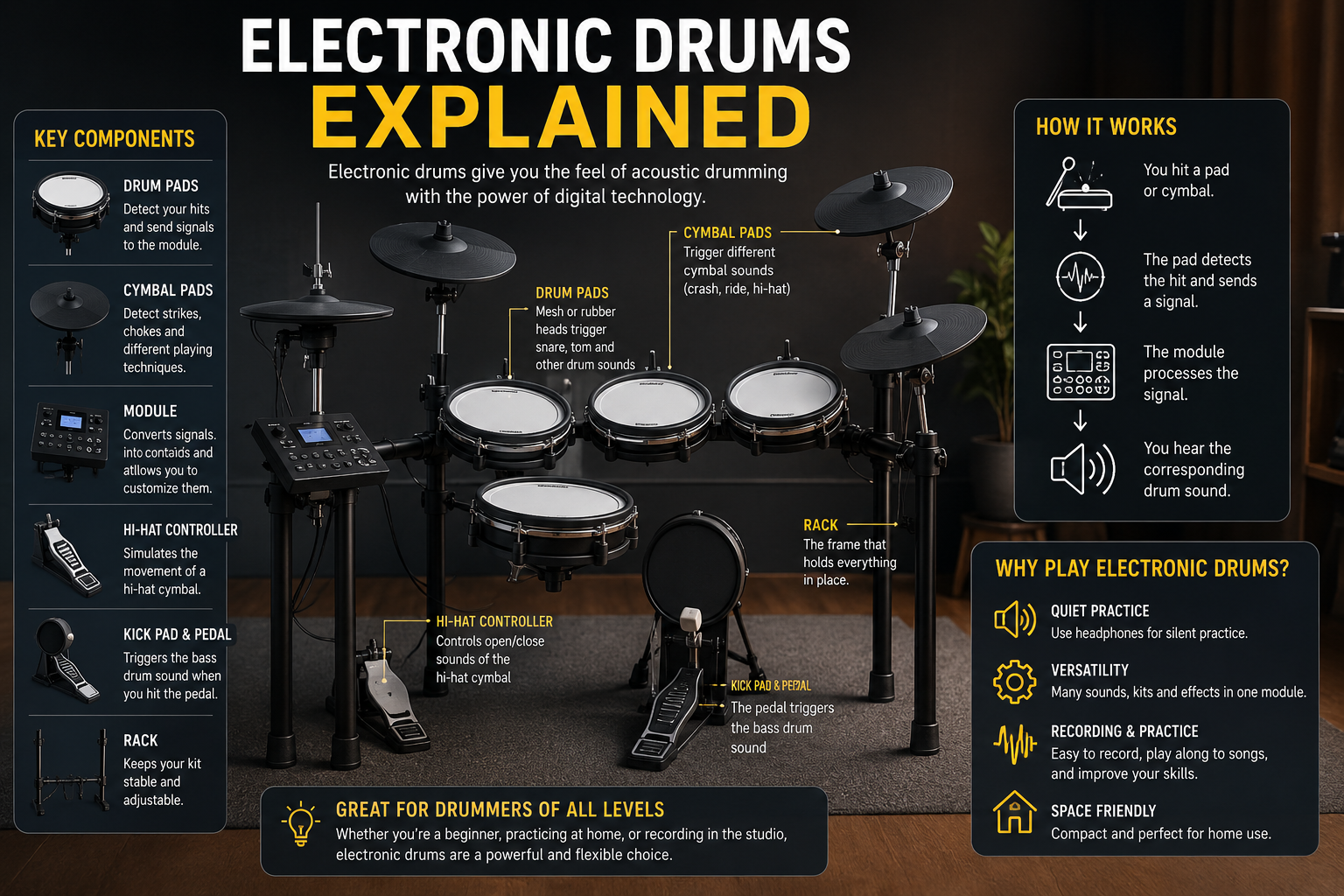
An electronic drum kit replaces traditional acoustic shells and metal cymbals with rubber or mesh pads and triggers. When you hit a pad, a sensor sends a signal to a central “brain” — the sound module — which plays a digital drum sound through headphones or speakers.
The sound module: the heart of the kit
The module stores hundreds of drum and cymbal sounds, full drum “kits,” and often built-in metronomes, coaching tools, and play-along songs. Higher-end modules deliver more realistic samples and finer dynamic response.
Why drummers choose electronic kits
- Quiet practice: play with headphones without disturbing neighbors or family.
- Compact size: most kits fold down to fit small rooms or apartments.
- Endless sounds: switch from rock to jazz to electronic in one tap.
- Easy recording: connect directly to a computer via USB or MIDI.
Are they good for beginners?
Absolutely. Built-in lessons, metronomes, and the ability to practice silently make electronic kits one of the best ways to start drumming today.